From long, ignored texts to voice-first support, and a real call when it matters most.
Role
Product Designer
Team
2 PDs, 3 PMs, 10+ engineers, QA
Category
Customer support
In short
BeforeSupport replied in long English texts. Users ignored them, even when the issue was already fixed.
What we builtVoice-first support, shipped in phases: voice notes, sharper replies, calls for high-value users, then voice input for all.
ResultNPS up 7.89% in an A/B test with 19K high rollers. Scaled to every user within 1.5 months.
Nobody reads support. So we let it speak.
Context
Rush is a skill-based gaming platform where players compete in Carrom, Ludo, Call Break and more, for real money.
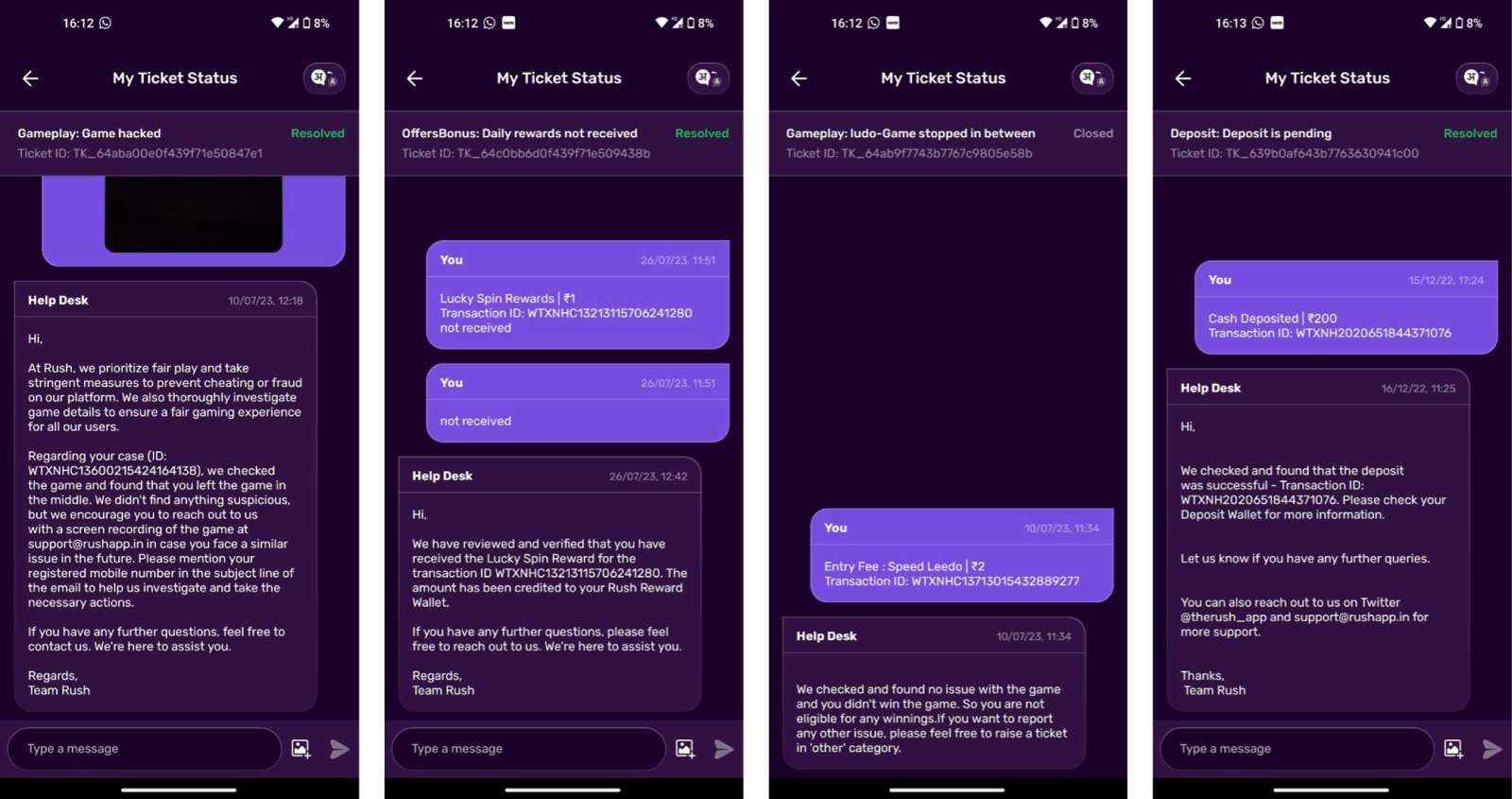
Its complaint system (CCMS) replied in long, complex texts. Most users skipped them, so even resolved tickets went unread, and trust slowly wore away. Behind it, 5 agents were handling 10,000+ tickets a day. A simpler, more human channel could win users back, especially on the "hard side".
The challenge
Fixing tickets wasn't enough. We wanted support that's fast, precise and empathetic, with less friction at every step, using AI to handle even the hard cases with care.
Build trust
Entirely voice-driven
Reduce response time
The dream state
Users didn't want a voice system. They wanted a real person who could fix their problem. Voice was the way there.
Step 1Reach outThe user contacts support.
Step 2Get helpAn agent resolves the issue.
Step 3Feel heardThey leave a positive NPS.
Research kept confirming it: a voice agent, especially in Hindi, builds trust. We expected it to lift N1 and N3 retention.
Who we serve
Basic English
Comfortable with simple words, not long sentences.
Visual first
Graphics land better than paragraphs.
Playing to recover
Most keep playing to win back their losses.
Why Rush
A friendlier UI than competitors.
Call support
Valued for gaming, deposit and withdrawal (GDW) issues.
Alok, 30Transport business owner · WB
Loss-making
Games played
14,450
Lifetime winnings
₹20,88,725
Deposited
₹2,24,657
Withdrawn
₹2,10,855
On Rush
Used to spend ₹50k+ a week; spends less after losses.
Believes hackers and bots play on Rush.
Stopped raising tickets: past ones stayed pending.
Doesn't fully understand TDS.
Hopes
Swap the business for driving a taxi, and more family time.
Save for the children's education and a home.
Struggles
₹1.5 lakh in debt from COVID and loans taken to play.
Sees real-money gaming as gambling, juaa.
Farzaan, 22Security guard · Delhi
Profit-making
Games played
5,217
Lifetime winnings
₹35,04,417
Deposited
₹10,16,819
Withdrawn
₹7,81,523
On Rush
Redeposited winnings as cashback to make up for TDS.
Delighted there's no TDS on Rush.
Hopes
Open a grocery store and grow financially.
Buy a house for the family.
Play more apps for a better combined income.
Struggles
Recognises only a few basic English words.
Sticks to a few tables; believes busier ones are rigged.
Vishnu, 21Student · Gorakhpur, UP
Profit-making
Games played
3,500+
Lifetime winnings
₹6,21,550
Deposited
₹2,44,129
Withdrawn
₹2,34,880
On Rush
Plays higher tables to recover losses.
Rides out losing streaks until back in profit.
Knows how Rush support works.
Hopes
A nudge to take breaks before chasing losses.
Support on call, with tips to play better.
Struggles
Unstable income; has borrowed from friends.
Plays across apps, but can't make a steady profit.
What users told us
We ran a health-check survey with ~2,000 daily cash users, then deep dives with 15 hard-side users who had used support in the last 30 days. We also studied complaint systems across real-money gaming.
Too hard to readLong, English-only replies that rarely solved anything, with email as the next step.
No replySome tickets sat open for months.
A hotlineUsers expected a quick way to reach someone for urgent issues.
The takeawayUsers wanted voice or calls, and answers in hours, not days.
Also on the list: clear refund policies, replies in their own language, and help with payment and game issues.
The plan
It touched every user and many teams, so aligning took weeks. We agreed on a phased rollout:
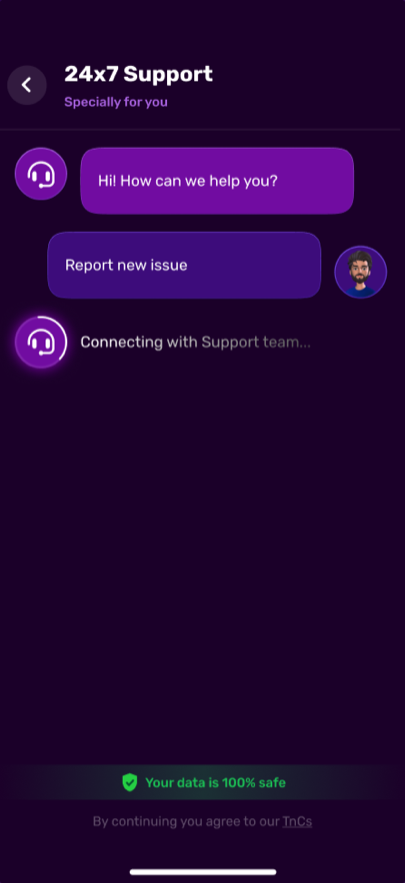
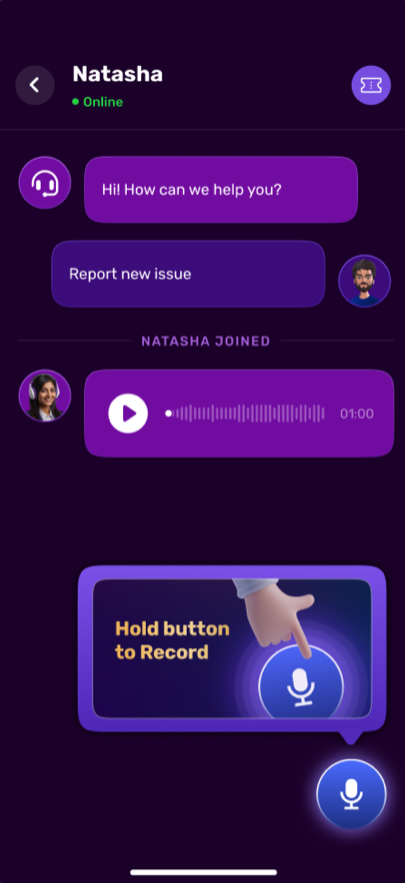
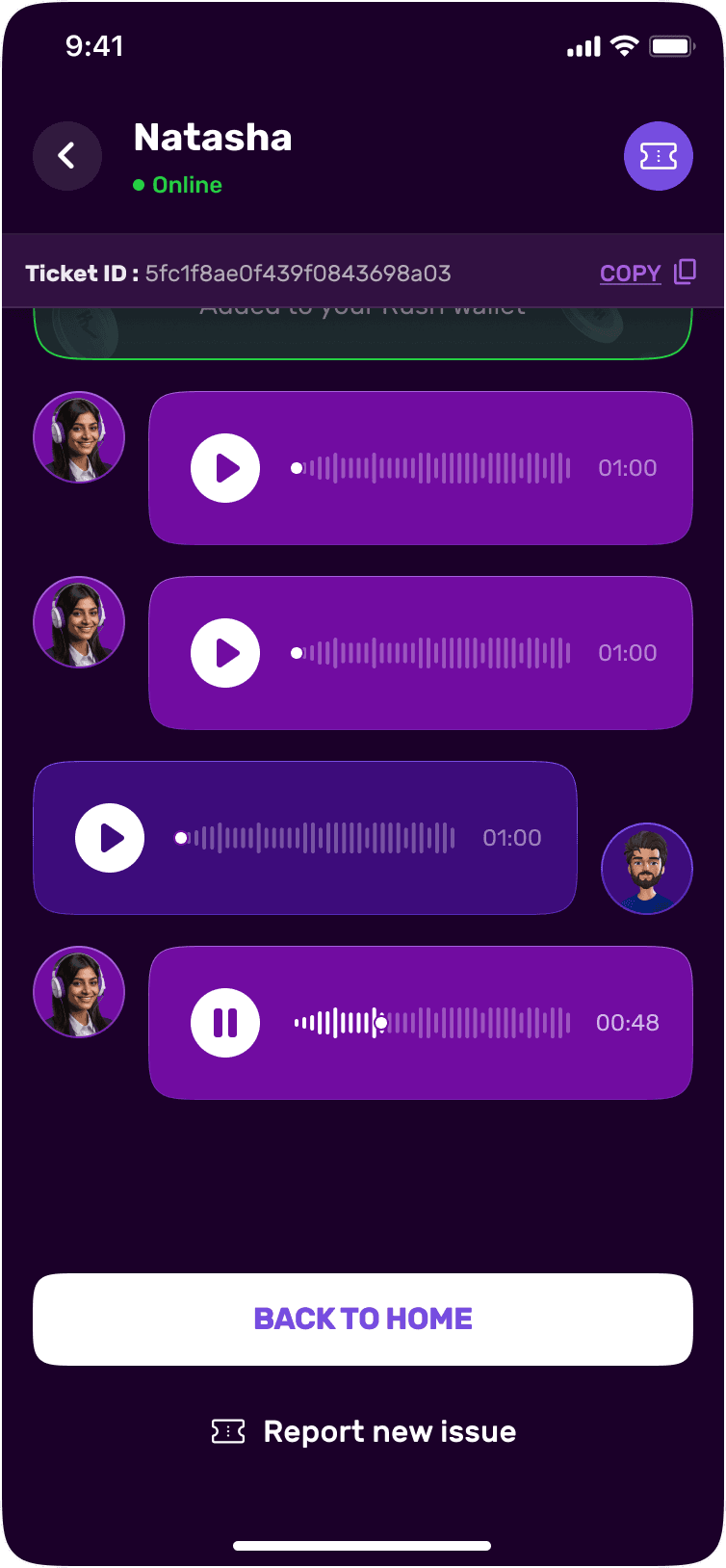
MVPVoice outputAnswers arrive as voice notes.
V1Clear expectationsExact turnaround times, and a place to vent.
V2Voice inputUsers speak, not just listen.
V2.1RelationshipsProactive, personal support, including calls.
MVP · shipped
After many rounds with PMs and engineers, the MVP came down to six things:
Click inputUsers still tap through options.
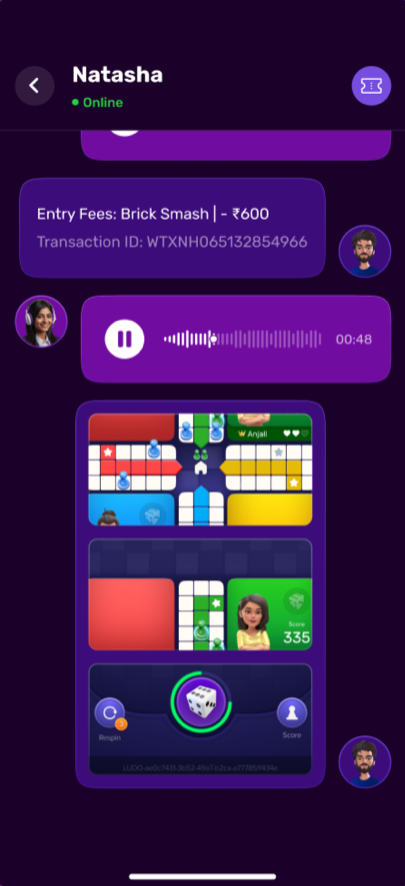
Voice-note answersPre-recorded, in Hindi and Hinglish, across 200+ problem paths.
Agent variety7+ agents with Indian names and voices, for a personal feel.
Fallback to a personHands over to a manual agent when needed.
Text + voice feedbackEspecially after a negative NPS.
Voice limitA configurable cap keeps recordings short.
The happy flow, end to end.
Negative NPS
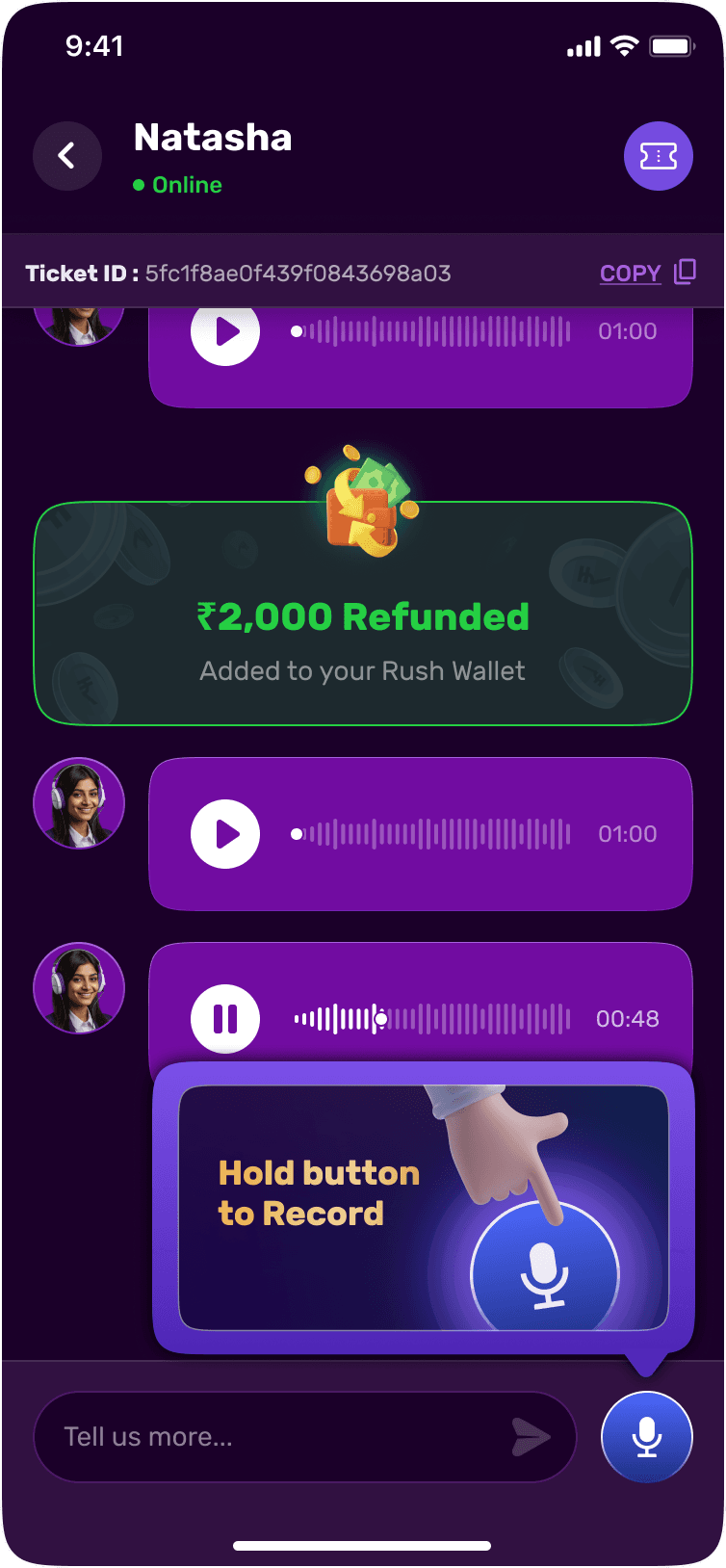
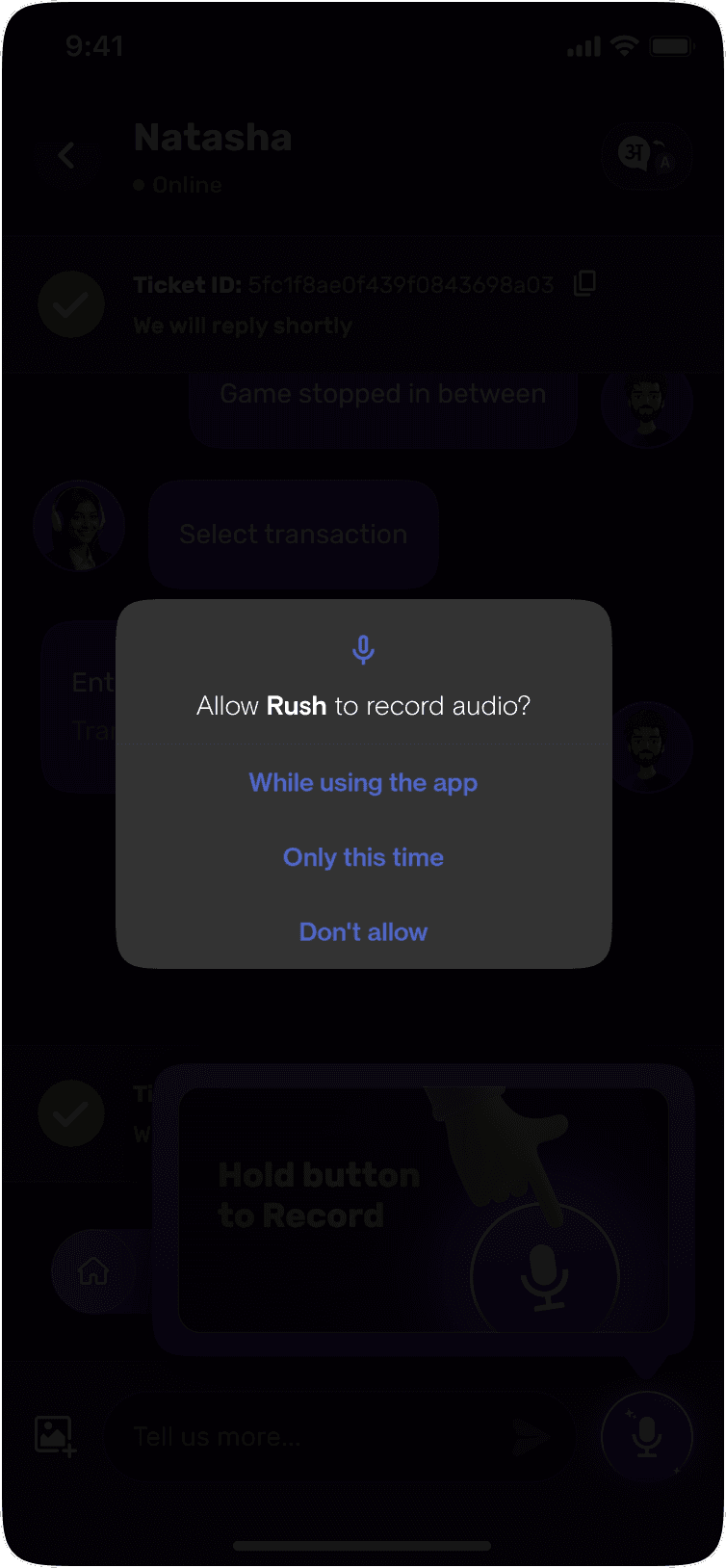
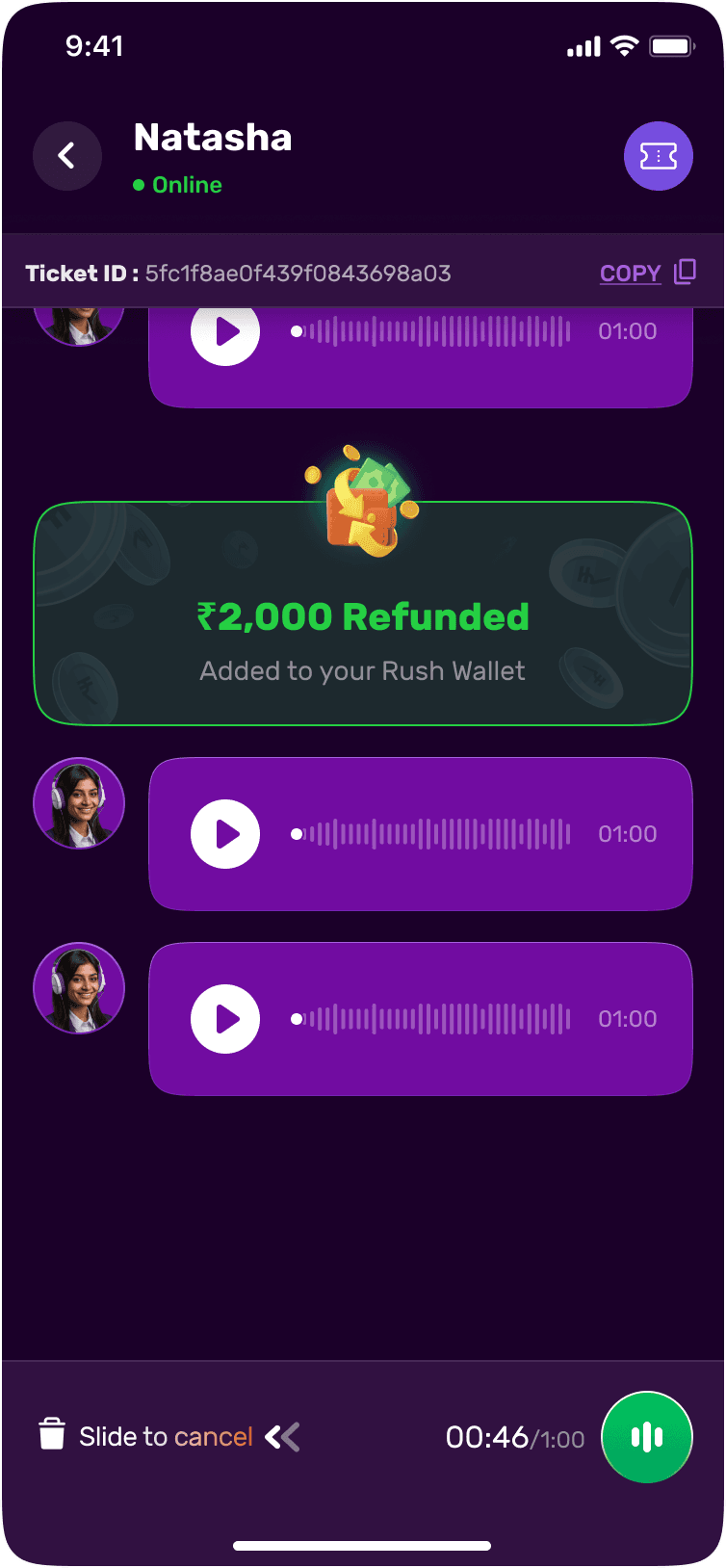
To test voice input early, we offered it only to unhappy users, who could leave feedback by speaking.
Testing caught
Recording delays, slow responses and a long list of edge cases, all fixed. It also added a second entry point from the wallet screen, where users manage deposits and withdrawals.
A gentle nudge
When a game, deposit or withdrawal goes wrong, users land on the home screen, where the support icon animates briefly (for a configurable time), then stops.
Why voice?
Users need real-time help, but voice isn't always comfortable, say, in a crowded metro. So we tested voice with transcripts against voice only.
Most chose voice only. Their WhatsApp explained whyAbout 90% of their messages were voice notes.
Anyone who prefers text can still switch back to the old flow at any point.
V1 · under the hood
Mostly AI, ML and engineering work:
Better voice notesClearer, with the exact response time.
Targeted answersAsk about TDS, get the TDS answer, not every FAQ.
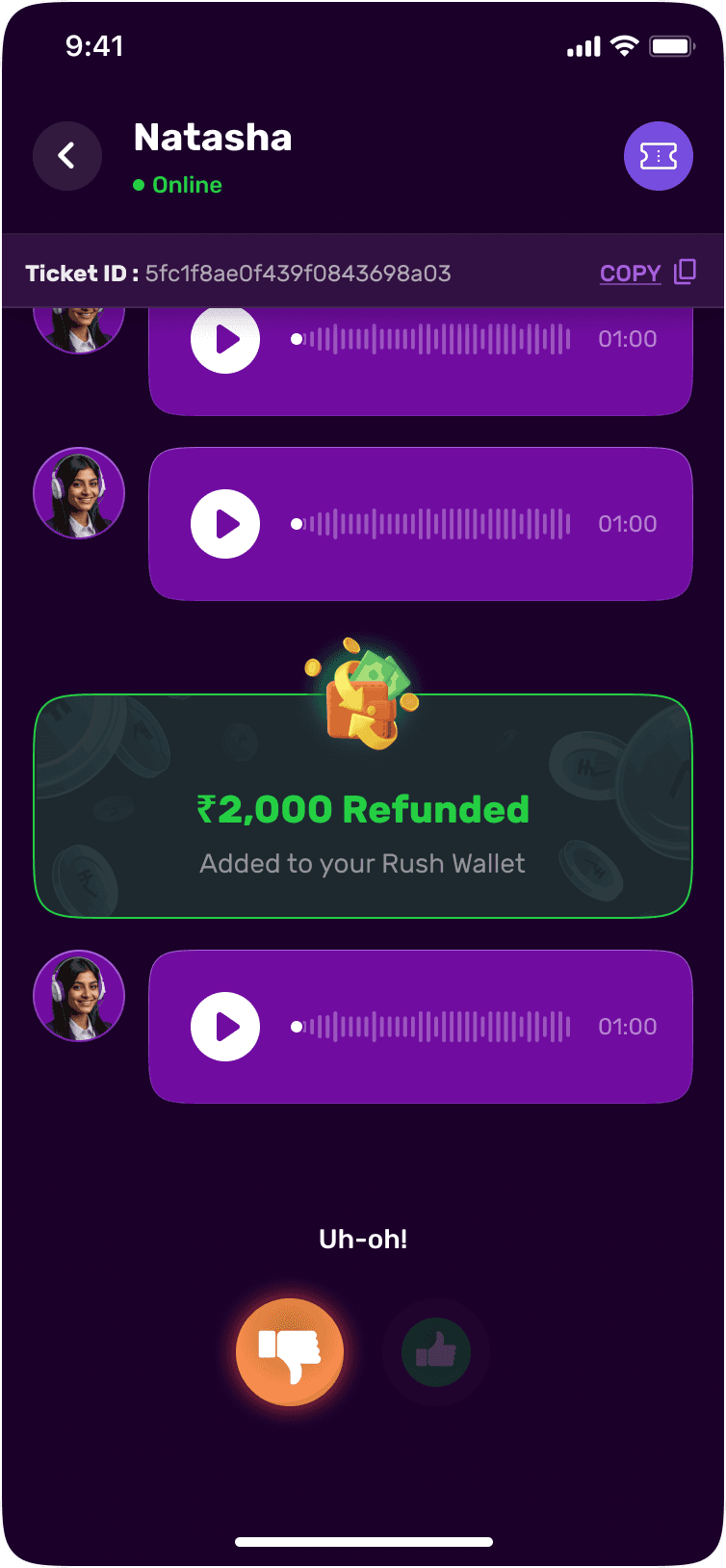
Happier refundsA small celebration when a refund lands.
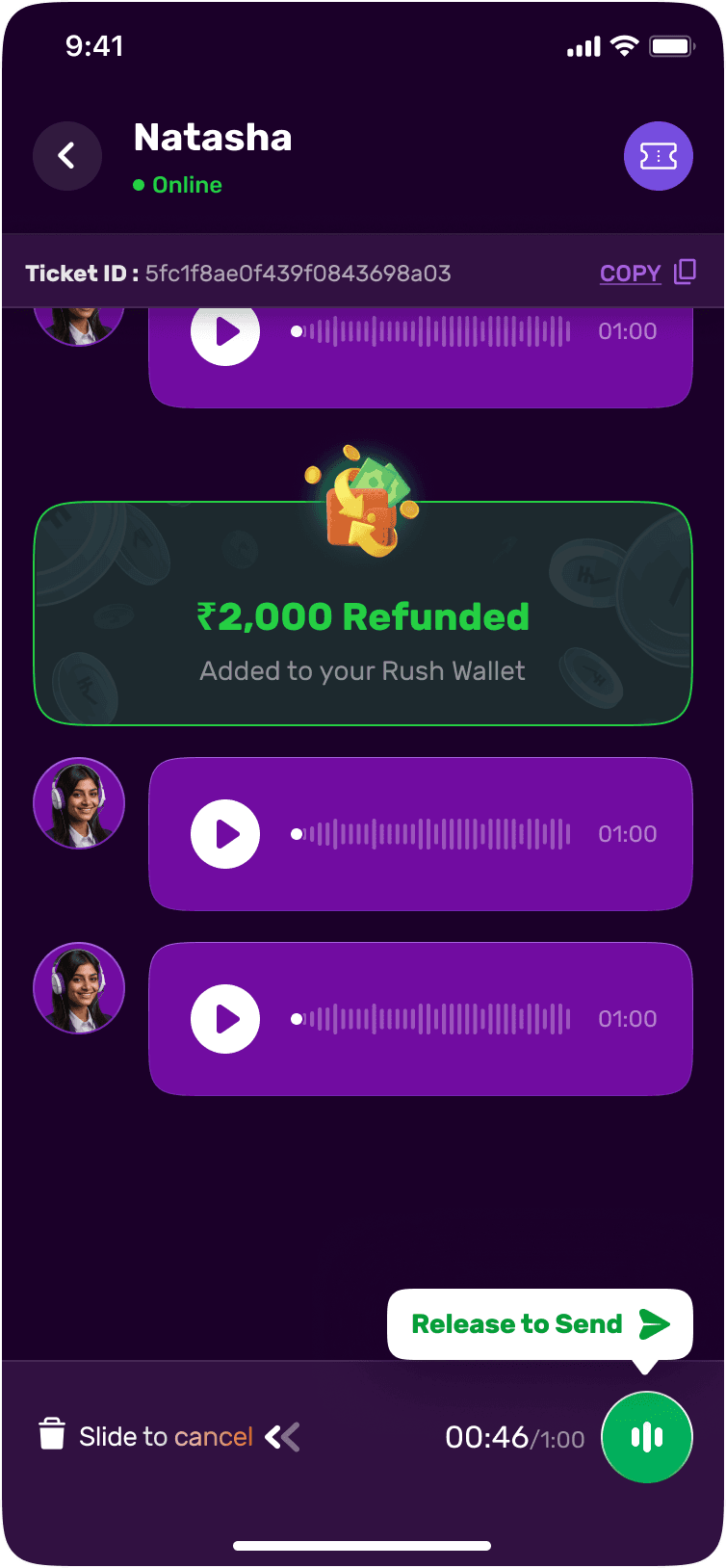
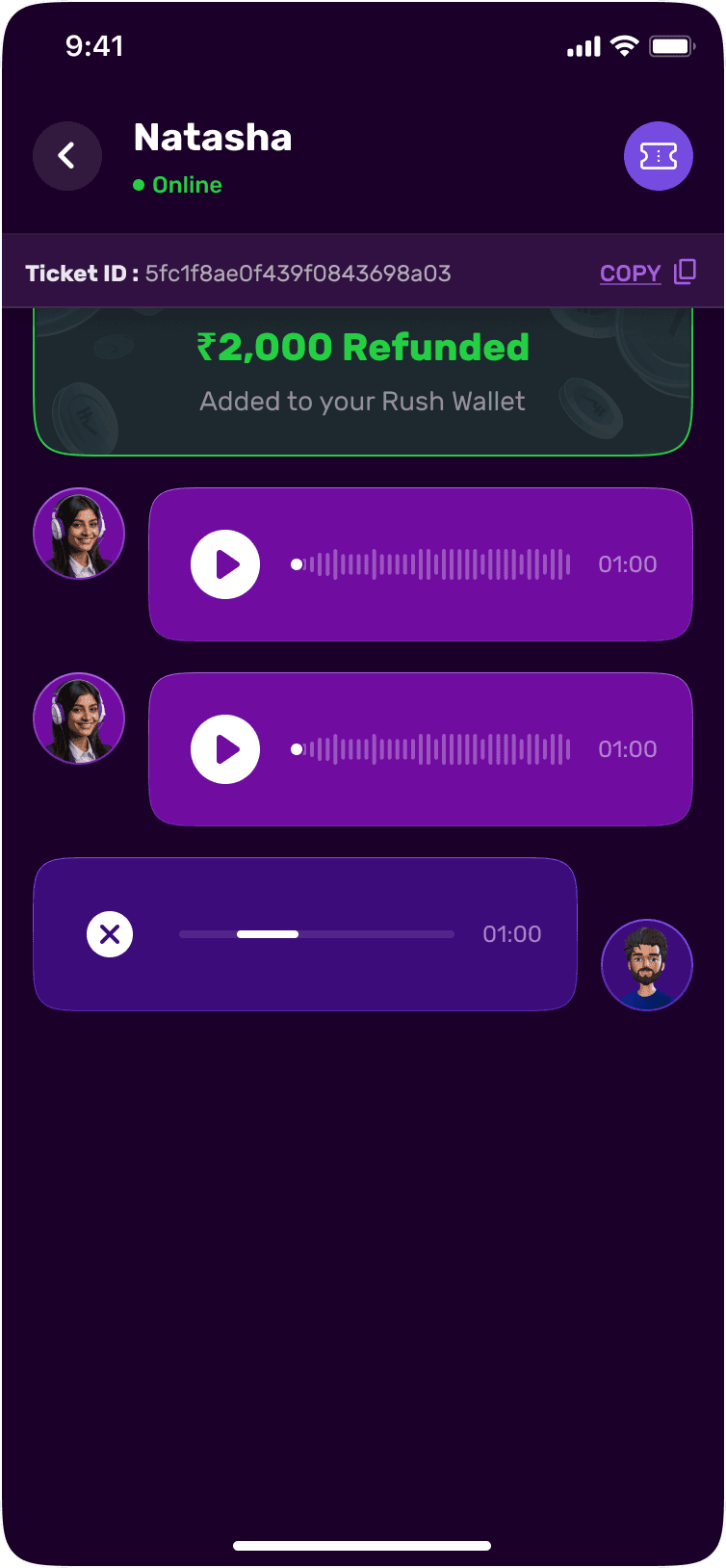
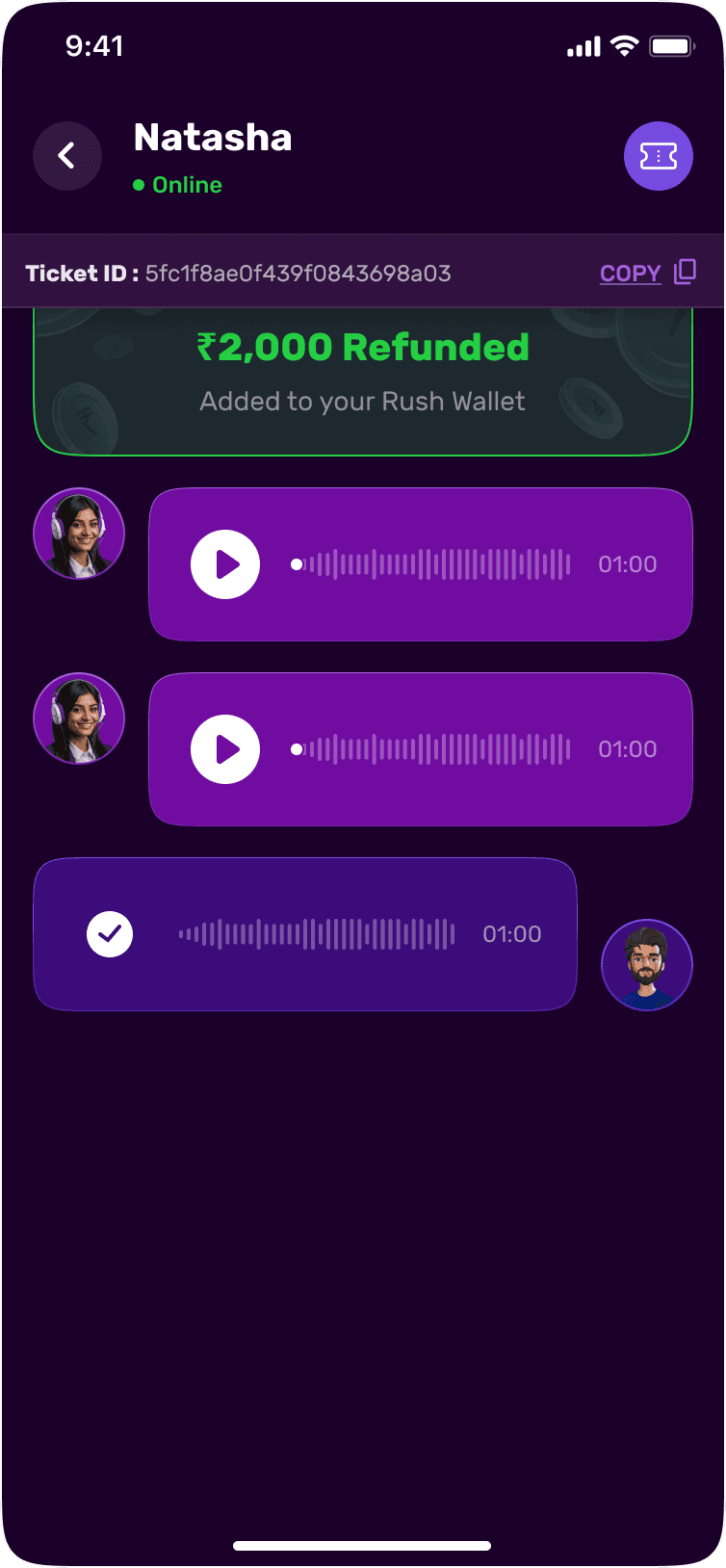
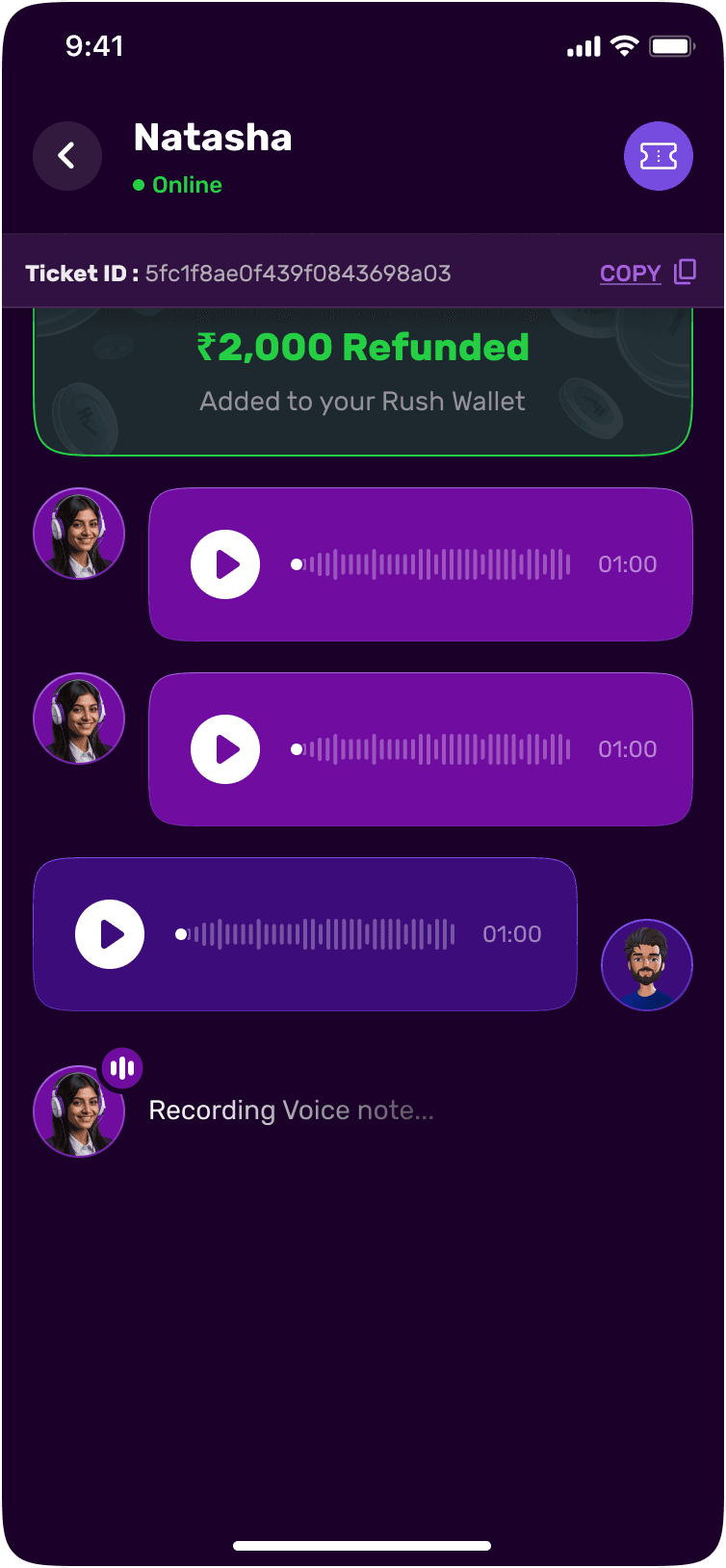
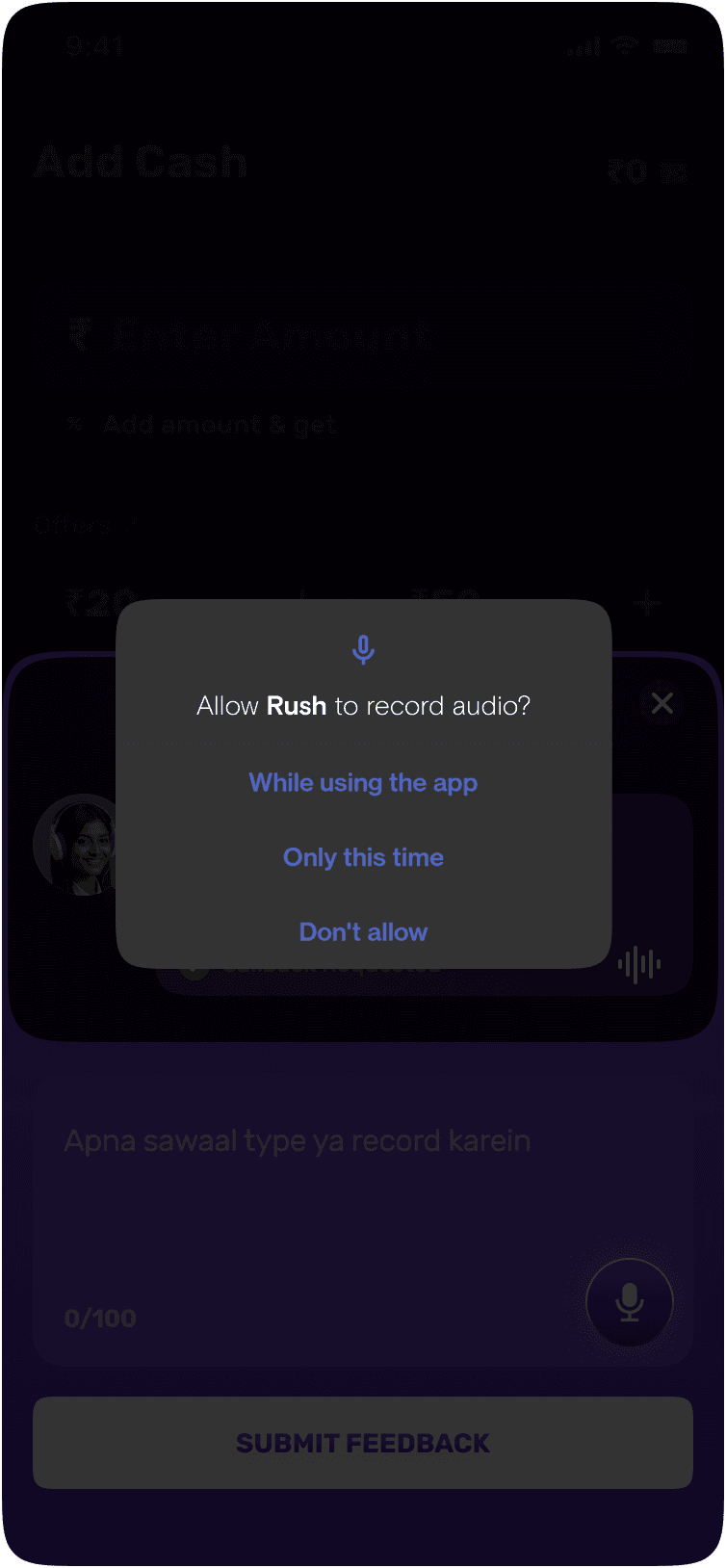
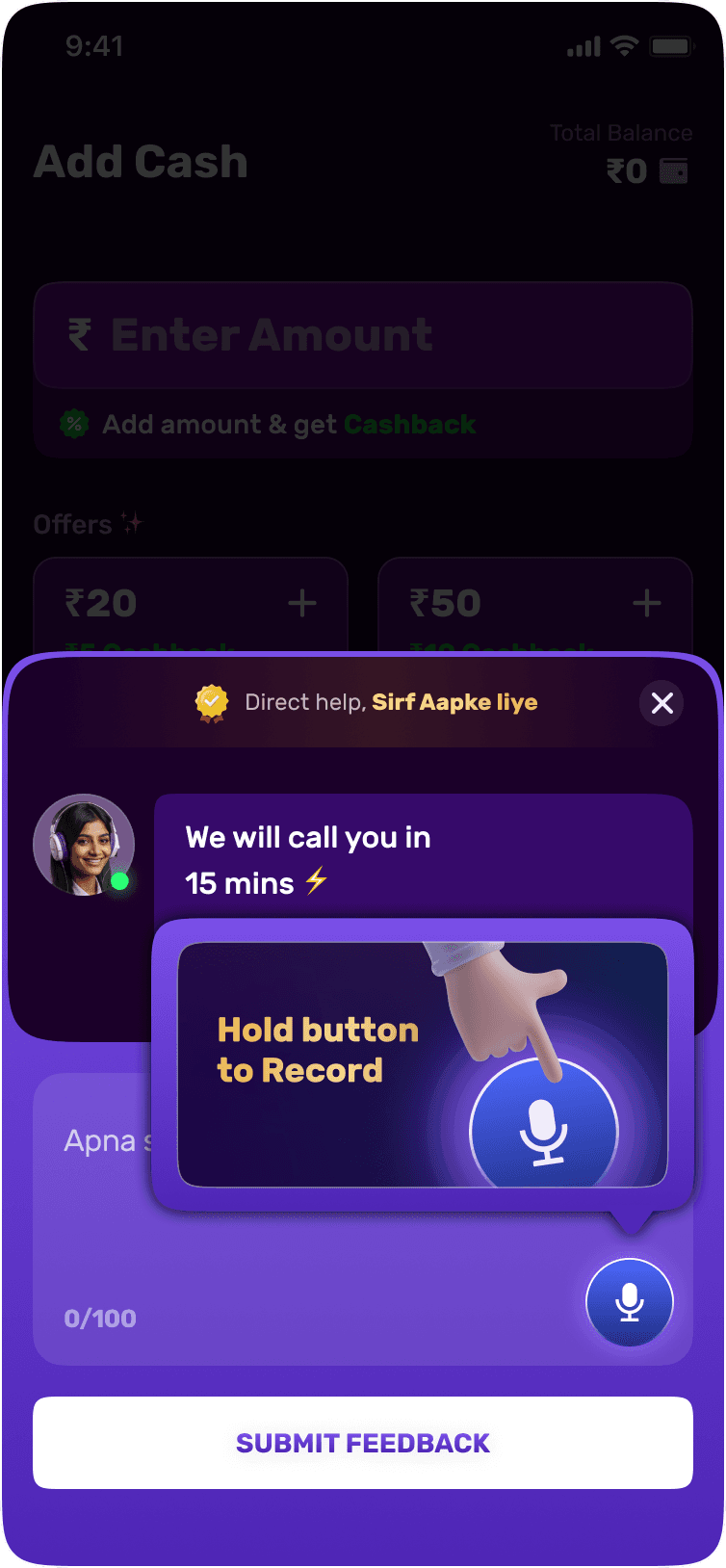
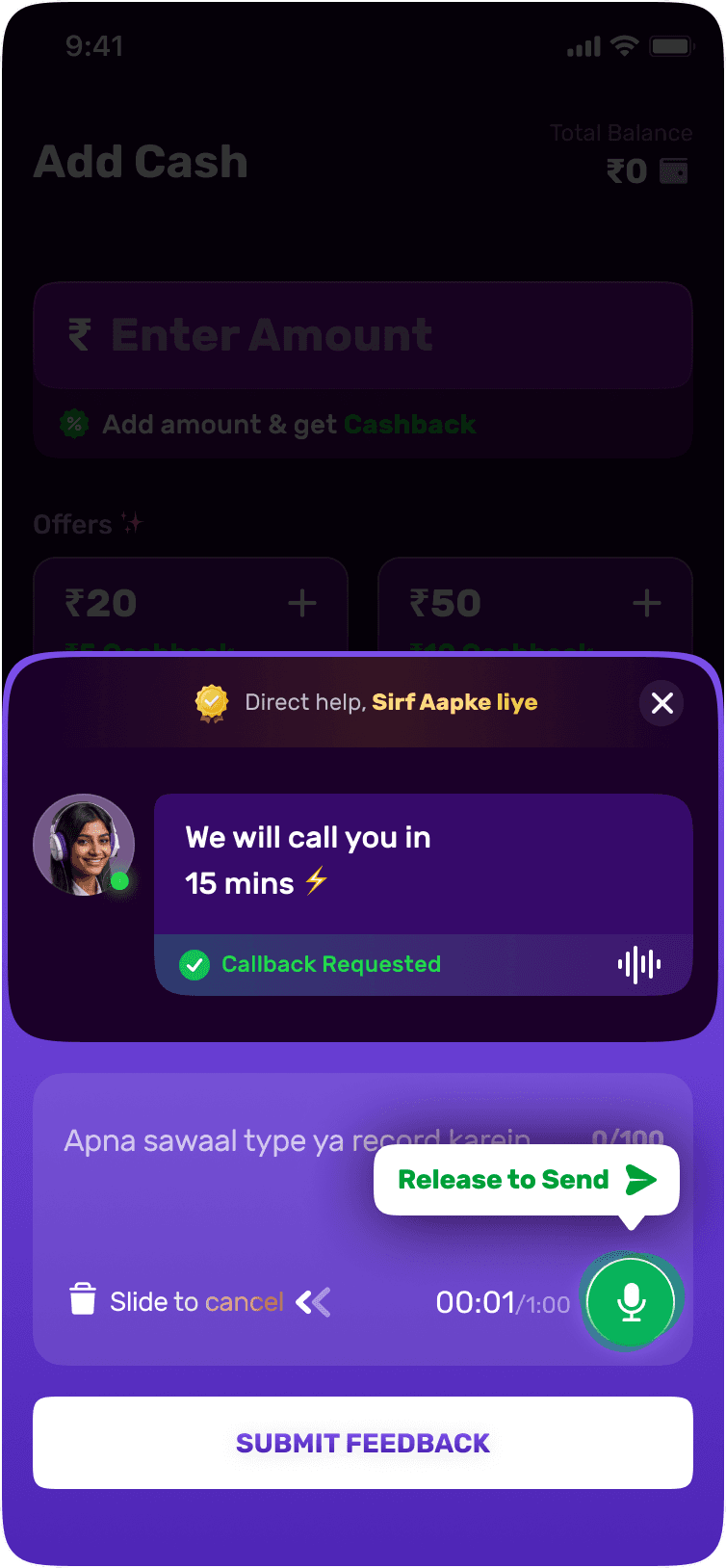
Voice inputUsers can add detail when there's no instant fix.
V2.1: a call when it matters · the dream state
The MVP landed well, so we prioritised V2.1 over the already-designed V2. It's for Super Hard Side and Potential Hard Side users, the 20% who drive about 80% of revenue. The key feature: request a call, and speak to someone right away.
The problem
High-value users lacked proactive, personal support. In tense moments, frustration grew and trust broke.
The opportunity
Step in with empathy at the most emotional moments, so users feel heard when it counts.
How it works
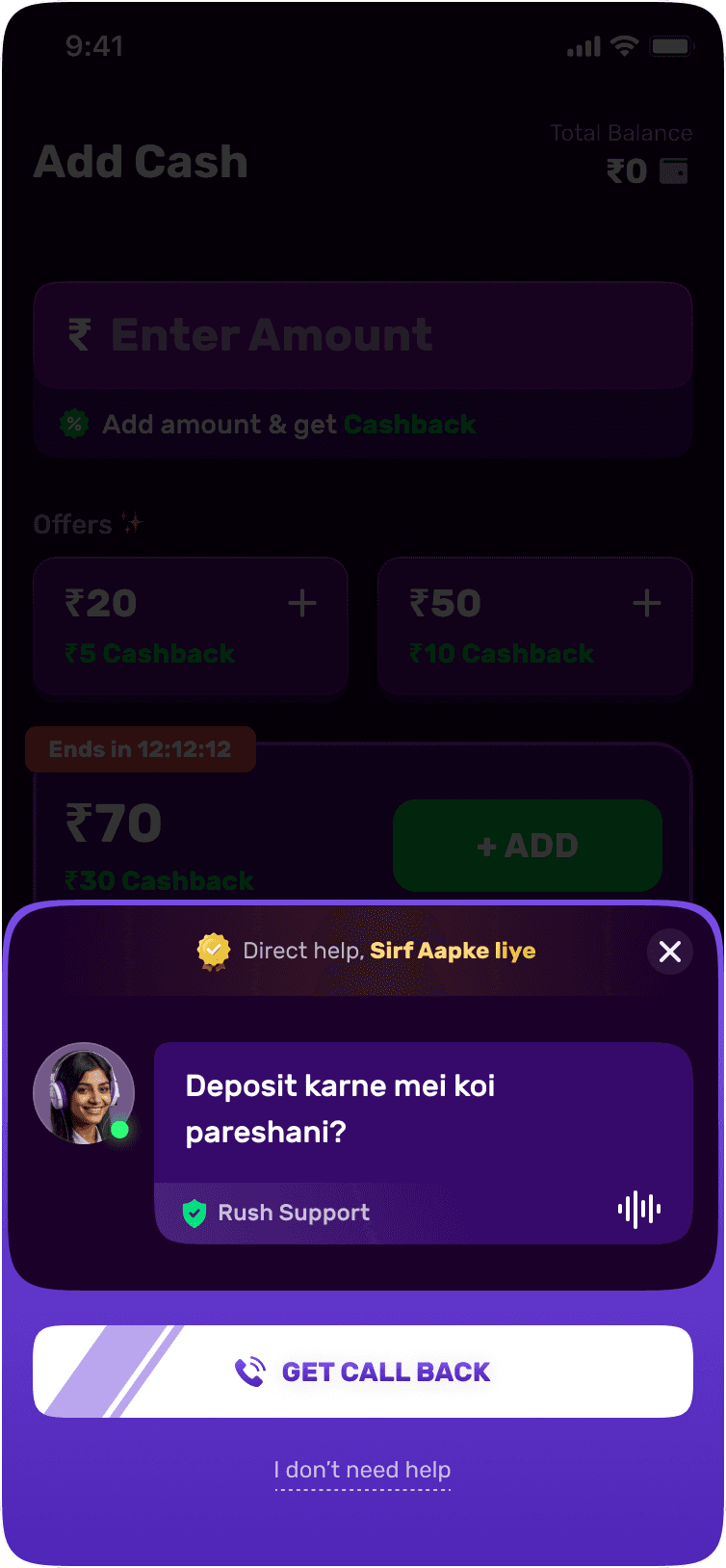
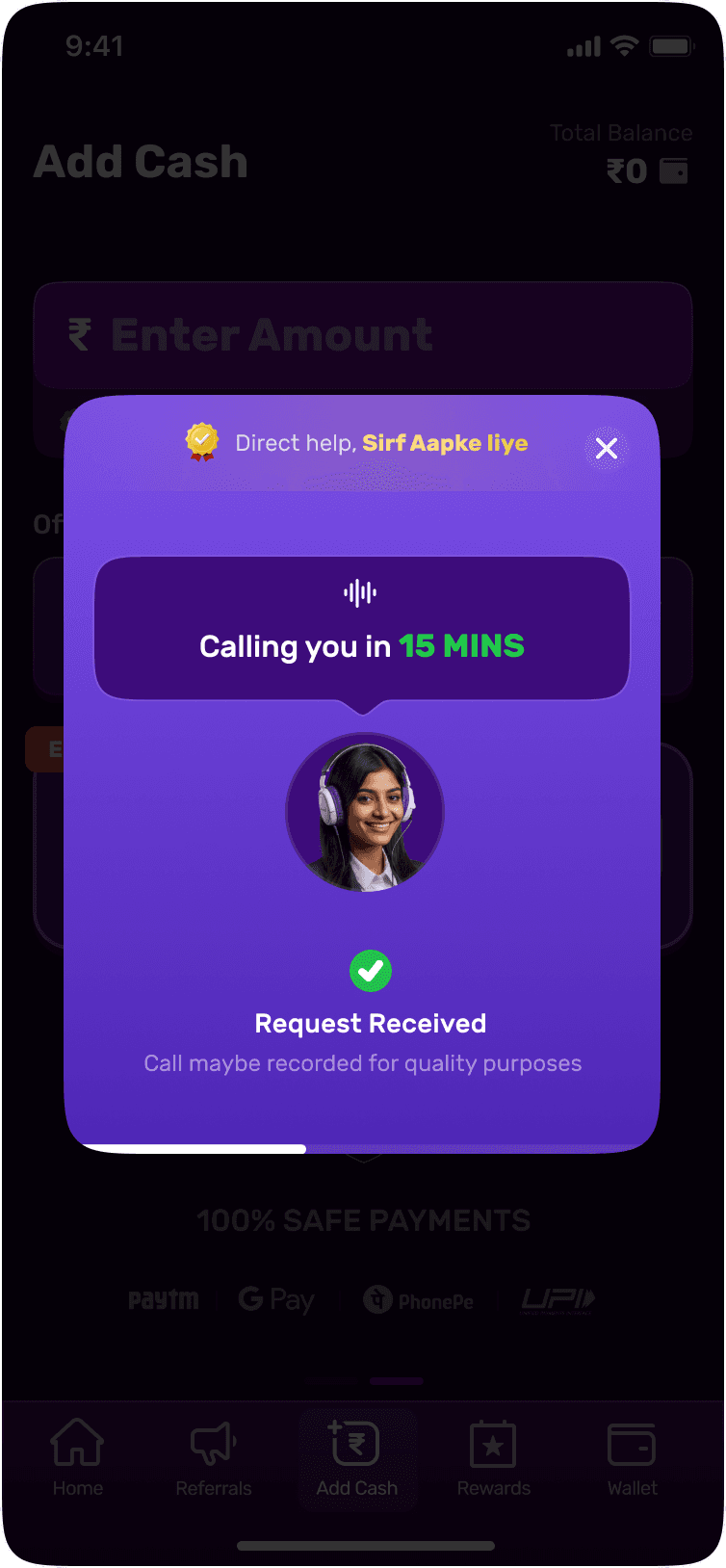
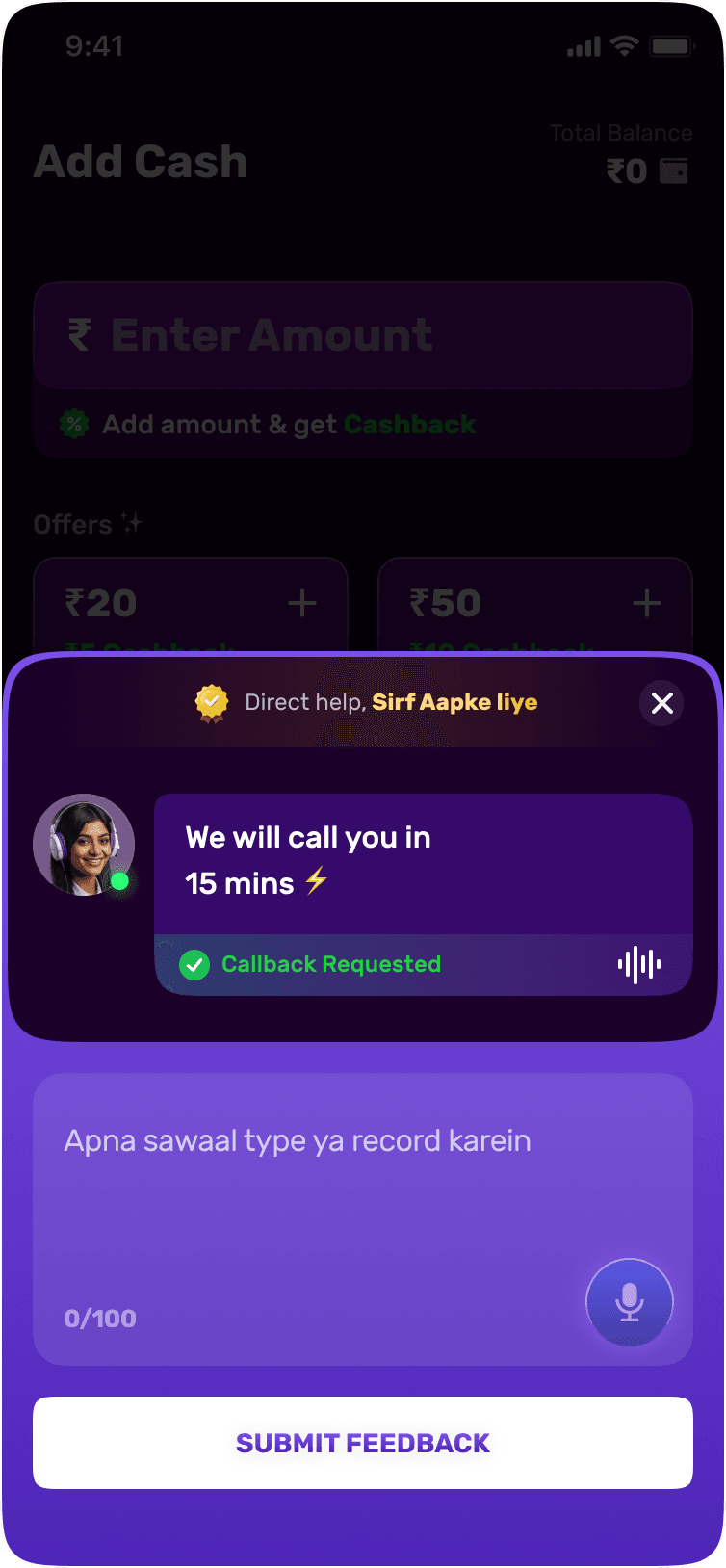
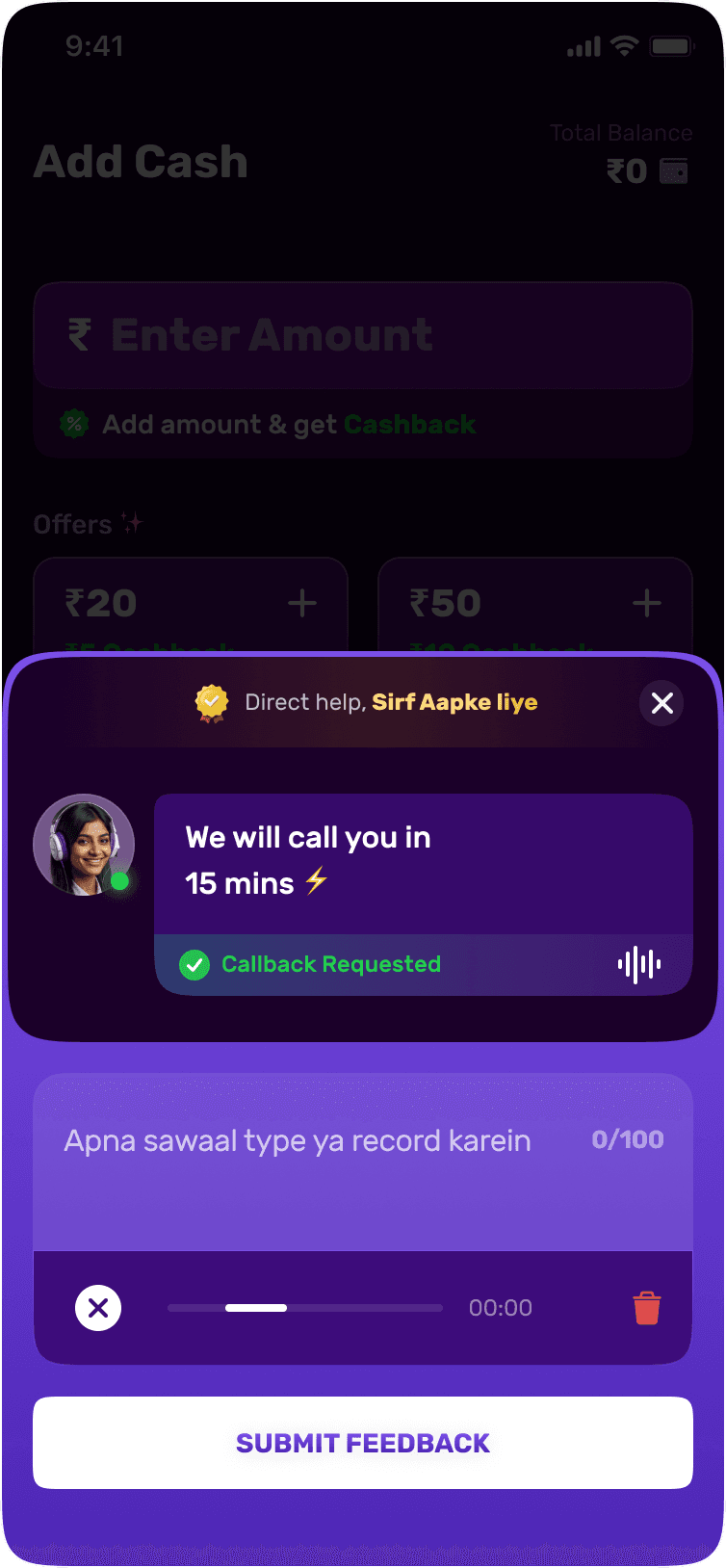
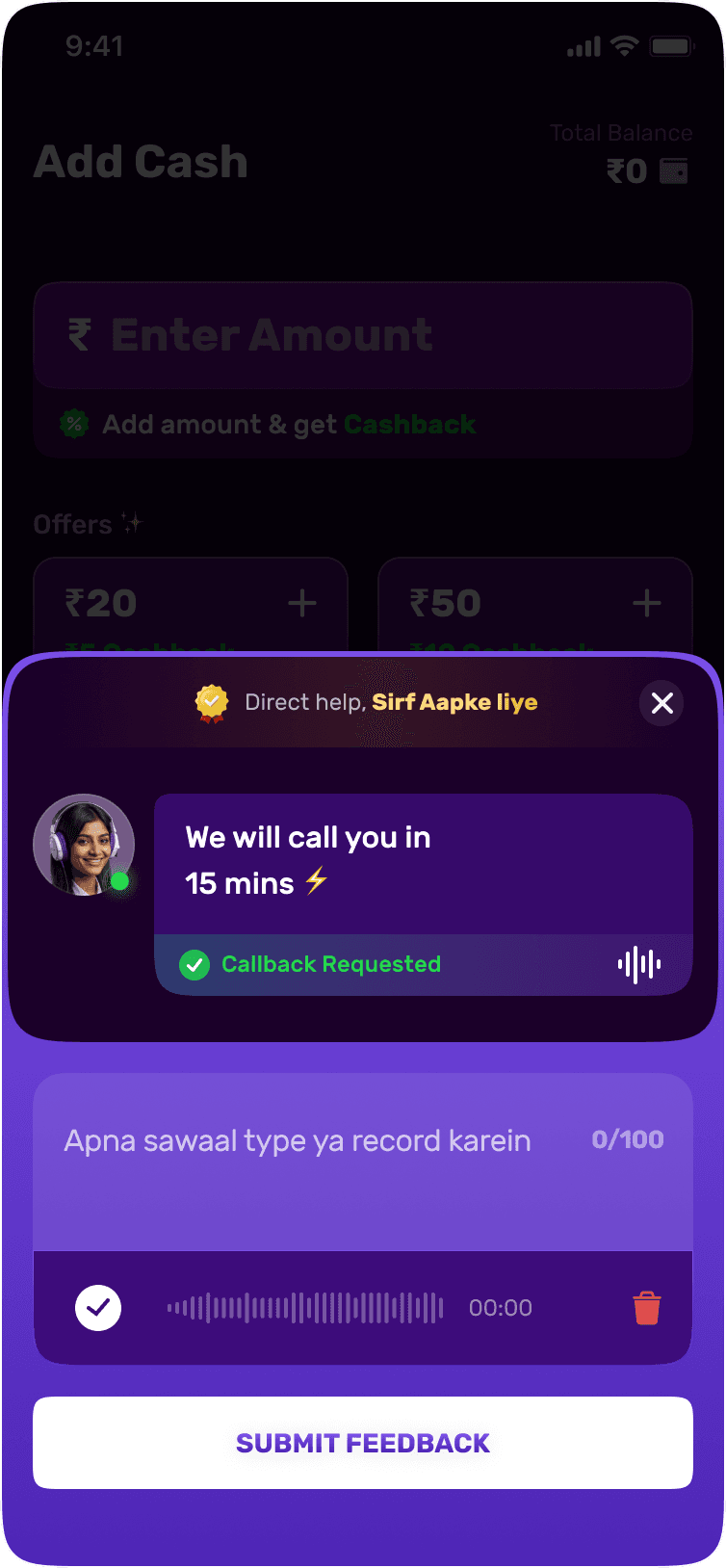
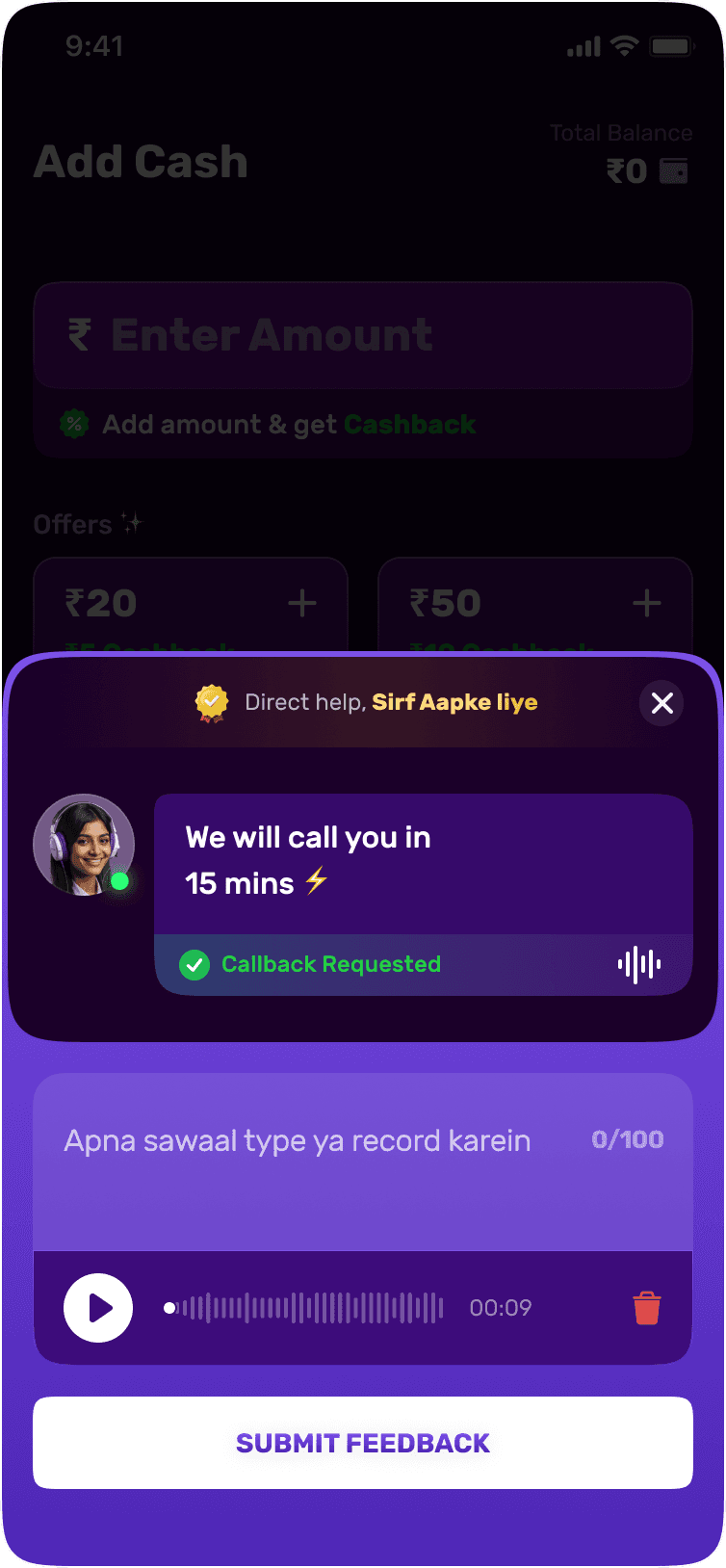
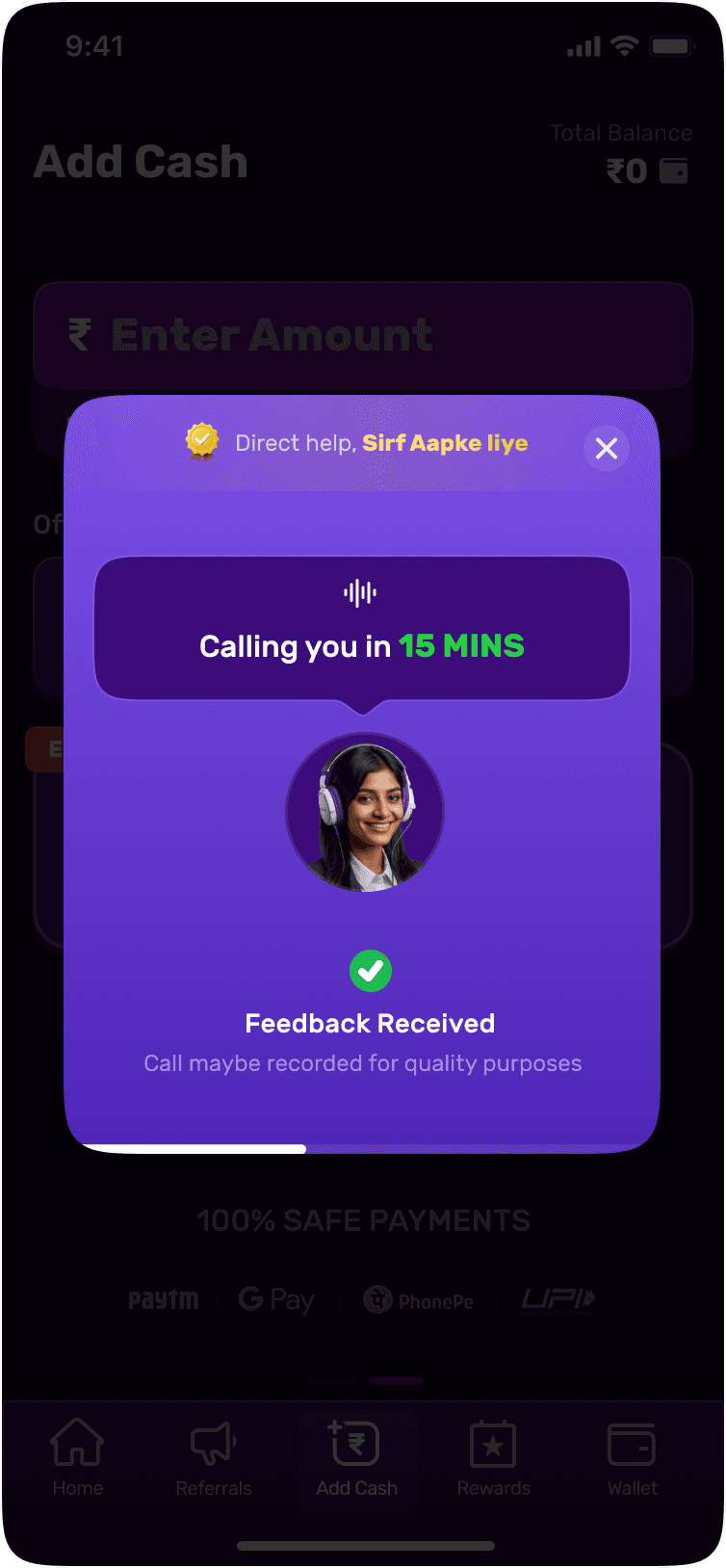
An AI model spots high-stakes moments and offers a call. A dedicated account manager calls back within 15–30 minutes, and their details sit in the profile and in Rush Support.
It's triggered when it matters most
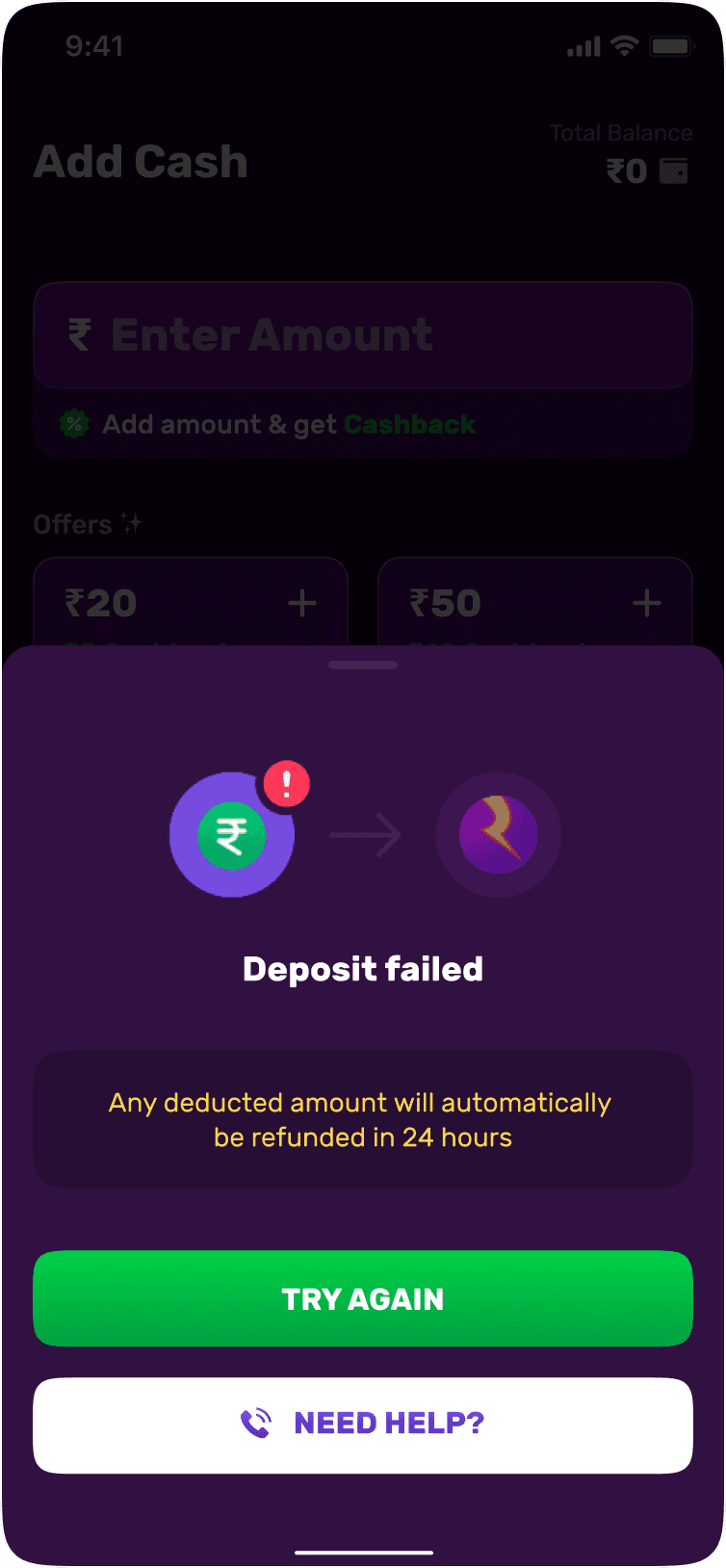
DepositPending or failed.
GameDisconnected or failed.
WithdrawalPending or failed.
Case: deposit pending
Case: a call was already requested, and the flow triggers again
V2: voice for everyone · rolled out
Next, V2 let every user describe their problem by voice. Other flows follow the same idea: confused about TDS? You get a voice note, and a button straight to the answer.
Edge cases
If the system can't understand, users get two or three tries before it falls back to a regular ticket.
Impact · A/B tested
+7.89%NPS, the north star.
+2.4%ARPU, average revenue per user.
+5.13%CM1, contribution margin.
An A/B test of the MVP against the old flow, with 19K high rollers. It scaled to 100% of users within 1.5 months.
Reflections
Share early
I shared prototypes early and often to keep everyone aligned. With little data, we debated every choice properly.
Push, or step back
Balancing many opinions taught me where to push, and when to step back.
Beyond the screen
Working across so many teams made me think about constraints, long-term scale, and bringing in the right people at the right time.
Thank you to my brother Yaman for trusting me with this, and to the team for building it so beautifully. We're still working on bringing calls, like V2.1, to everyone.